Saad
Driouech
Machine Learning Engineer with a research background in generative AI and applied ML. M.Sc. thesis introduced the first spatial control framework for scale-wise autoregressive T2I generation. Experience spans diffusion models, autoregressive generation, RAG pipelines, and AI automation. 5 peer-reviewed publications. Based in Fürth, Germany.
About me
Researcher. Engineer.
Builder.
I'm a Machine Learning Engineer with a research background in generative AI, NLP, and applied ML. M.Sc. in Artificial Intelligence from Friedrich-Alexander-Universität Erlangen-Nürnberg, grade 1.1 (passed with distinction). Currently working as a Generative AI Research Engineer at Fraunhofer IIS.
My M.Sc. thesis introduced the first spatial control framework for scale-wise autoregressive T2I generation: a ControlNet-style architecture over a frozen 2.5B-parameter backbone, six control modalities, and a unified model with learned modality routing. My work spans diffusion models for signal reconstruction, transformer pre-training for low-resource NLP, production RAG systems, and agentic LLM pipelines.
I have 5 peer-reviewed publications across NLP, TTS, and applied ML. I love the challenge of translating research insights into reliable, maintainable software.
Deep Learning
Diffusion models, transformers, TTS: trained and evaluated across diverse domains and modalities.
LLM Systems
RAG pipelines, agentic workflows with LangGraph, multi-LLM orchestration, and streaming backends.
MLOps & Automation
Airflow, n8n, FastAPI, Docker: end-to-end pipelines from data to deployed, monitored systems.
Published Researcher
5 papers in IEEE, Springer, MDPI spanning NLP, TTS, and e-commerce ML.
Technical skills
Tools of the trade
ML & Deep Learning
NLP & Speech
LLM Systems & RAG
Automation & Backend
Infrastructure
Languages
Personal projects
Things I've built
Side projects exploring the frontier of LLM systems, agentic AI, and ML automation.
Spatially Controlled SWITTI
First spatial control framework for next-scale autoregressive T2I generation
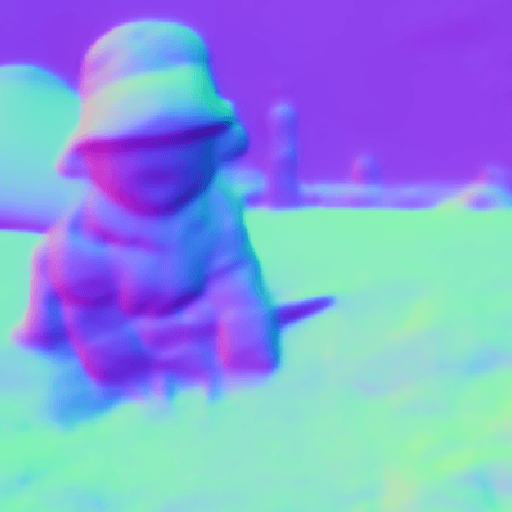
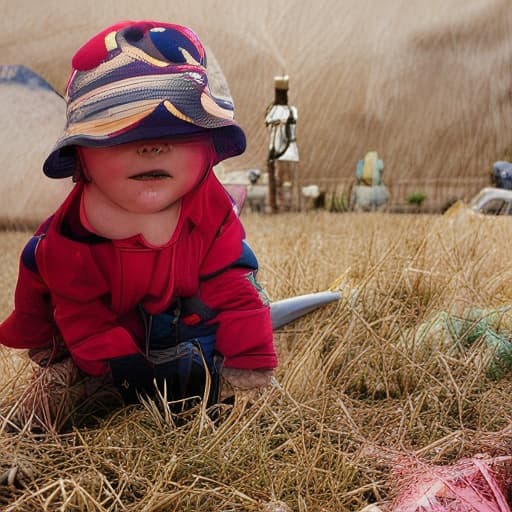
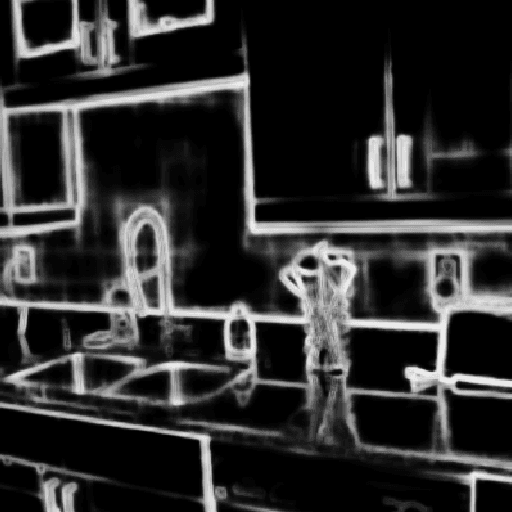
Integrated spatial conditioning into SWITTI, a 2.5B-parameter scale-wise autoregressive T2I model. The only work addressing controllable T2I in the next-scale AR paradigm. Two novel architectures (31M and ~2.5B trainable params), six control modalities, and a unified model with learned modality routing that matches specialist performance within 10–15%.
PaperLens
RAG system for research papers with a three-stage retrieval pipeline: bi-encoder search (MiniLM + Qdrant), cross-encoder reranking (ms-marco), and diversity-aware selection ensuring all indexed sources are represented. Hybrid dense + BM25 search with Reciprocal Rank Fusion. Groq (Llama-3.3-70b) for cited answer generation. Served via Streamlit UI, FastAPI, and CLI.
CurateAI
(AI News Curation Bot)Airflow 4-task DAG (twice daily) that polls Discord reactions to build a preference profile, fetches AI news via Tavily with SQLite deduplication, scores articles with Claude + Instructor for structured output, and publishes Discord embeds with 👍/👎 buttons. User reactions are re-injected as few-shot examples into Claude's scoring prompt each run, making the bot more accurate without any retraining.
ApplAI
5-phase automated job application pipeline. Scrapes 4 job boards (Arbeitnow, Remotive, RemoteOK, Adzuna), pre-filters with 50+ AI/ML keywords, scores with Gemini 2.5 Flash, then generates LaTeX CVs & cover letters via Claude, compiled with pdflatex behind a LaTeX safety validator. Discord Approve/Reject/Rescue buttons (Ed25519-verified), Notion dashboard, and a preference feedback loop that refines future scoring. n8n 12h cron, security-first throughout.
MotiGen
Agentic motivation letter generator built on a LangGraph 4-node pipeline with typed state: CV parsing → JD parsing → live company research (dual Tavily queries for culture + role context) → letter generation. Supports Claude, Groq, and OpenAI via a unified model factory. FastAPI backend with SSE streaming for real-time output; Streamlit UI for file-upload workflows.
Work experience
Where I've worked
Generative AI Research Engineer
Mar 2025 — PresentFraunhofer IIS · Nuremberg, Germany · Working Student
- Training diffusion-based generative models for GNSS signal reconstruction under real-world interference conditions; iterating on architectures and loss functions to stabilise training and prevent mode collapse.
- Designed systematic evaluation frameworks measuring model robustness under noise and distribution shift; experimented with spectrogram and complex IQ data representations.
- Managed the full experimental lifecycle: hypothesis formulation, implementation, ablation studies, and documentation. Tracked all experiments with TensorBoard.
- Collaborated with signal processing engineers to translate experimental findings into concrete modelling decisions.
Applied Machine Learning Engineer
Dec 2023 — Feb 2025August-Wilhelm Scheer Institut · Saarbrücken, Germany · Working Student
- Built end-to-end ML pipelines for garment return prediction on cold-start products with no transaction history, achieving 86% balanced accuracy; addressed class imbalance and feature sparsity.
- Refactored and parallelized preprocessing pipelines, achieving a 5× runtime speedup and significantly improving iteration speed and reproducibility.
- Conducted feature importance analysis to identify key return drivers, enabling interpretable recommendations for business stakeholders.
Development Engineer
Jun 2023 — Aug 2023Hightech Payment Systems · Casablanca, Morocco
- Enhanced PowerCARD, HPS's global payment switching and card management platform, to meet VISA and Mastercard compliance requirements.
- Worked with SQL databases, Docker containers, CI/CD pipelines, and Linux environments in a professional engineering setting.
Applied NLP Research Engineer
Sep 2022 — May 2023Al Akhawayn University · Ifrane, Morocco · Part-time
- Pre-trained two transformer language models (DarELECTRA 52M, DarRoBERTa 80M) for low-resource Moroccan Darija on a 1 GB code-mixed corpus; fine-tuned on three downstream tasks.
- Text summarization: DarELECTRA achieved ROUGE-1 19.25 / ROUGE-L 18.01, state-of-the-art among all tested models including ARBERT and MARBERT.
- Topic classification: F1 0.84 / accuracy 0.86; offensive language detection: 90% accuracy / 85% F1; published at IEEE CiSt 2023 and MDPI 2024.
Applied ML Engineer (Intern)
May 2022 — Jul 2022Wenov, Attijariwafa Bank Innovation Lab · Casablanca, Morocco
- Built a transformer-based intent classification system to automatically route multilingual client inquiries to relevant departments, replacing a legacy rule-based system.
- Outperformed traditional ML baselines by +7% accuracy / +4% F1; evaluated across multiple language variants and edge cases.
Education
Academic background
M.Sc. Artificial Intelligence
Friedrich-Alexander-Universität Erlangen-Nürnberg
Thesis: Finetuning Visual Autoregressive Models for Controllable Image Generation. First spatial control framework for scale-wise autoregressive T2I generation — ControlNet-style architecture over a frozen 2.5B-parameter SWITTI backbone, six control modalities, unified model with learned modality routing.
B.Sc. Computer Science
Al Akhawayn University
Capstone: Darija Text-to-Speech Synthesis using FastSpeech 2 + HiFi-GAN on a 2-hour low-resource dataset. MOS 3.905; published at ICDTA 2025.
Publications
Peer-reviewed work
Moroccan Darija Text-to-Speech Synthesis
ICDTA 2025
Towards Waste Reduction in E-Commerce: Garment Returns Prediction
SN Computer Science, Springer · May 2025
Investigating Offensive Language Detection in a Low-Resource Setting
Big Data & Cognitive Computing, MDPI · Nov 2024
Compact Transformer-based Language Models for Moroccan Darija
IEEE CiSt · Dec 2023
Contact
Let's connect
Open to full-time roles, research collaborations, and interesting problems. Based in Fürth, Germany, open to relocation.
Whether you're hiring, want to collaborate on a project, or just want to talk AI, my inbox is open.